Engine-derived ROI benchmarks for Breckenridge-area short-term rentals, single-family rentals, and small commercial properties. Numbers come from running real fixtures through the Cost Seg Smart engine, same engine that produces your actual study. Studies from $495.
Operated by Cost Seg Smart. Studies are IRS-aligned with internal technical review & QC included. 5 fixture benchmarks computed May 2026.
Numbers above are engine-estimated outputs from running 5 representative fixtures, not promises about what your specific property will produce. Results vary based on actual property condition, year built, renovation history, county assessor data quality, and rental treatment (STR vs LTR). Full per-fixture table, neighborhood breakdown, and downloadable CSV/PDF on the Breckenridge cost seg benchmarks page.
Breckenridge sits in an unusually clean state-tax position for cost segregation. Colorado fully conforms to federal §168(k), computing state taxable income on the federal base — so the 100% federal bonus depreciation restored under OBBBA in 2025 reduces both federal and Colorado liability in the same year, with no addback, no Schedule X reconciliation, and no decoupling. At Colorado's flat 4.40% rate, the state-side savings is roughly 4.4 cents per dollar of accelerated reclassification — a modest but real Year-1 addition on top of the federal deduction. Compare to a California-side Tahoe or Big Bear owner whose state-side acceleration is recovered slowly over the regular MACRS schedule.
Structurally, Breckenridge is heterogeneous in a useful way for cost-seg analysis. The Town of Breckenridge mixes 1880s–1920s mining-era SFR stock (where renovation cost segregation drives the math because the original structural shell is heritage construction with limited reclass potential), early-2000s and post-2010 ski-village condos and townhomes (where new-build FF&E density and shared-system depreciation produce clean reclassification ratios), and resort-tier Peak 7/8 ski-in/ski-out condos (where the basis is large but land allocation runs 32–38% from resort-land scarcity premiums). The cost-seg picture changes meaningfully across these sub-markets.
The year-round demand profile is the practical operating advantage. Breckenridge runs ski traffic November–April and summer hiking/biking traffic June–September, with shorter shoulder seasons than single-season destinations. That supports stronger 5-year STR hold-period modeling than markets where occupancy collapses for 6+ months annually. Material participation under §469 is achievable for self-managing operators, but the Breckenridge professional-management ecosystem (Vail Resorts-affiliated managers, local operators) is well-developed, and the >100-hour-and-more-than-anyone test is harder to clear when a manager runs day-to-day.
Verify with your CPA. State tax conformity rules for federal §168(k) bonus depreciation are adjusted frequently, multiple states have modified their treatment two or more times in the past decade. The general framing on this page reflects our understanding as of May 2026, but you should always verify current-year treatment with a qualified CPA or tax attorney before relying on specific dollar projections for your situation.
These aren't rough estimates. Each fixture was run through the same engine that produces your actual study, RSMeans 2026 base costs, BLS PPI time index, county assessor land allocation, IRS Pub. 946 / Rev. Proc. 87-56 MACRS classification, 100% bonus depreciation per OBBBA.
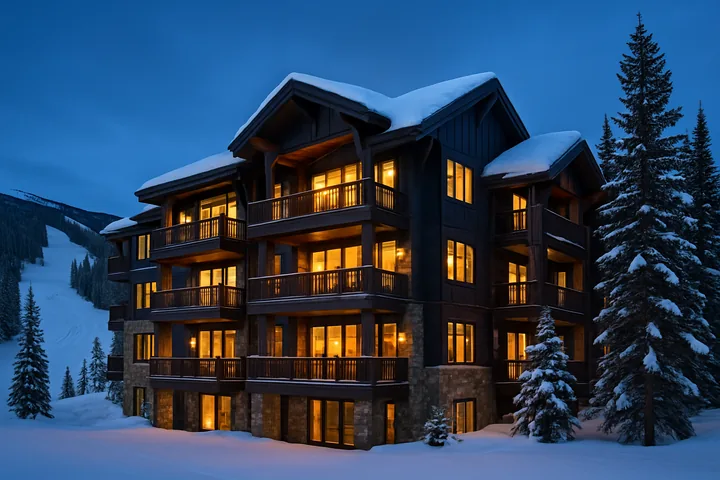
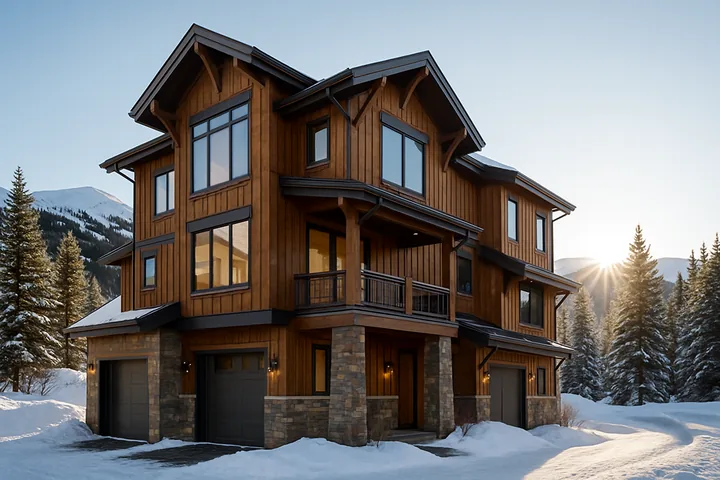
| Purchase price | $2,150,000 |
| Depreciable basis | $1,075,000 |
| Land allocation | 50.0% |
| 5-year reclassified | $208,692 |
| 15-year reclassified | $66,391 |
| Total reclass | 26.1% |
| Purchase price | $1,485,000 |
| Depreciable basis | $1,139,292 |
| Land allocation | 23.3% |
| 5-year reclassified | $226,090 |
| 15-year reclassified | $71,339 |
| Total reclass | 26.6% |
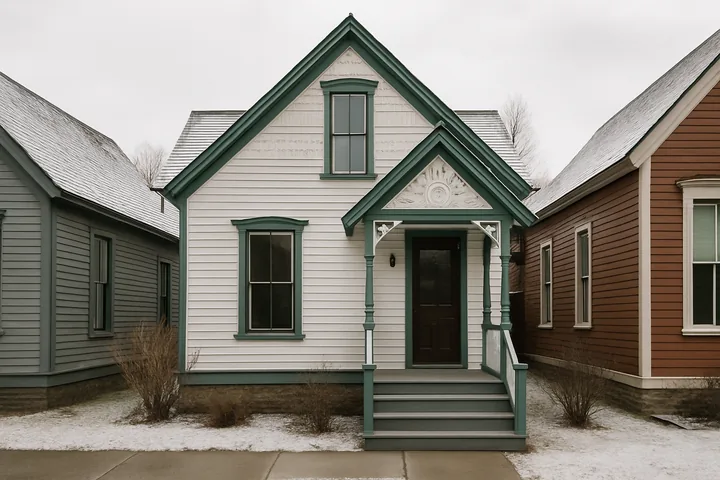
| Purchase price | $1,185,000 |
| Depreciable basis | $899,178 |
| Land allocation | 24.1% |
| 5-year reclassified | $149,318 |
| 15-year reclassified | $59,792 |
| Total reclass | 23.6% |
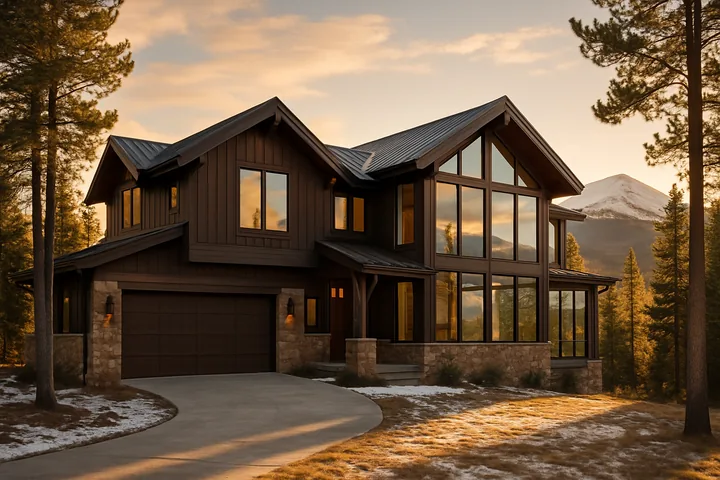
| Purchase price | $1,325,000 |
| Depreciable basis | $1,022,635 |
| Land allocation | 22.8% |
| 5-year reclassified | $197,891 |
| 15-year reclassified | $64,269 |
| Total reclass | 26.2% |
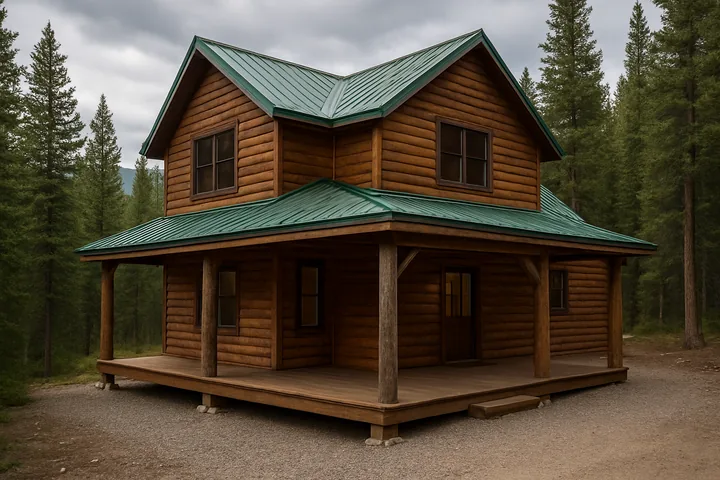
| Purchase price | $825,000 |
| Depreciable basis | $638,632 |
| Land allocation | 22.6% |
| 5-year reclassified | $65,145 |
| 15-year reclassified | $42,578 |
| Total reclass | 16.9% |
Cost-seg ROI varies more by neighborhood than by city. Breckenridge's 5 sub-markets each have their own land-allocation pattern and property archetype:
| Neighborhood | Typical value | Typical land allocation | Profile note |
|---|---|---|---|
| Peak 7 / Peak 8 base (ski-in/ski-out) | $2,150,000 | ~36% | Premium ski-in/ski-out condo stock at the Peak 7 and Peak 8 base areas. Resort-tier land allocation. Town of Breckenridge jurisdiction with active STR licensing. Higher absolute basis, lower percent-of-purchase reclass. |
| Peak 9 base / Village | $1,485,000 | ~30% | Resort village core, mid-rise and townhome stock. Walkable to lifts and downtown. Town jurisdiction, active permit regime. Higher density than upper-peak neighborhoods. |
| Downtown Breckenridge (historic core) | $1,185,000 | ~26% | Historic mining-era Main Street corridor and surrounding residential. Heavy renovation cost-seg potential on 1880s–1920s structures. Town jurisdiction with strictest STR enforcement. |
| Highlands / Boreas Pass corridor | $1,325,000 | ~24% | Off-mountain SFR market south of downtown along Boreas Pass Road. Larger lot sizes, lower land allocation. Town jurisdiction but lower-density residential. |
| Blue River (south, unincorporated) | $825,000 | ~20% | Unincorporated Summit County south of Breckenridge town limits. Lighter permit regime than Town of Breck. Mountain cabin and SFR stock, often year-round resident or LTR crossover. |
Methodology note: "Typical land allocation" reflects baseline patterns for the sub-market. For ultra-premium or resort-tier inventory where reconstruction cost exceeds 2.0× the implied depreciable basis after subtracting baseline land, the engine applies a premium land floor (~50%) to keep the study within audit-defensible territory. This means individual fixture engine output may exceed the neighborhood typical, especially for resort-tier ski-in/ski-out, beachfront, or view-premium product where land scarcity dominates value. See the /data/ page for per-fixture land-source attribution. Results vary substantially by specific property condition, renovation history, and assessor records.
Town of Breckenridge operates a Short-Term Rental Licensing program with distinct Type 1 and Type 2 license classifications, annual renewal requirements, neighborhood-level density caps in some zones, and compliance triggers (noise complaints, parking violations) that can revoke licenses. The Town has been one of the more actively-managed ski-resort STR regulators in Colorado. Unincorporated Summit County (Blue River and points south, parts of the Boreas Pass corridor outside town limits) operates a lighter county-level STR registration. STR-intent buyers should verify a property's jurisdiction — Town of Breckenridge vs unincorporated Summit County — before underwriting permit availability and hold-period assumptions. Material participation under §469 favors self-managing operators given the strong full-service property-management ecosystem in the market; document hours contemporaneously and structure operations to clear the >100-hour test if STR-loophole treatment matters to your tax planning.
For the full IRS-rule reference layer (§168(k), §469 material participation, state conformity), see irsdepreciationrules.com, our open reference site.
Yes — Colorado computes state taxable income starting from federal taxable income, and applies the 4.40% flat rate to that. There's no Colorado-specific bonus depreciation addback or modification for §168(k) acceleration. The 100% federal bonus restored under OBBBA in 2025 flows through to your Colorado return without adjustment. For a Breckenridge owner taking $90,000 of accelerated reclassification, the federal Year-1 savings at 37% is $33,300 and the Colorado Year-1 savings at 4.40% is $3,960 — both captured in the same tax year, no addback, no decoupling math. This is one of the cleanest state-tax positions for cost-seg, materially better than California (decoupled) and worse only than zero-state-tax states (Tennessee, Florida, Texas, Nevada).
Two practical differences. (1) Hold-period assumption: Town of Breckenridge operates an active licensing regime with density caps in some neighborhoods and compliance-driven revocation risk — model conservative 5-year STR-revenue hold periods rather than 10+ year horizons. Unincorporated Summit County (Blue River, parts of Boreas Pass corridor) has lighter regulation, supporting more aggressive hold-period modeling. (2) ADR / occupancy: Town-of-Breck properties typically command higher ADR because of walkability to lifts, dining, and downtown — but face the regulatory tighter regime. Off-town unincorporated properties have weaker ADR profiles but more permit certainty. Cost-seg engine output doesn't change between the two jurisdictions; what changes is the operating-economics-and-hold-period overlay.
Resort-tier land allocation. Engine outputs for Peak 7/8 ski-in/ski-out condos run 32–38% land, vs 22–28% for off-mountain SFR in the Highlands or Boreas Pass corridor. Higher land allocation compresses depreciable basis as a percentage of purchase, which compresses the reclassification ratio even when absolute dollar amounts of reclass remain large. A $2.15M Peak 8 condo with 36% land allocation has $1.38M of depreciable basis; at the typical 18–22% reclass ratio for resort-tier product, that's $250K–$305K of accelerated reclass. By contrast a $1.32M Highlands SFR with 24% land allocation has $1.00M of basis; at a 24–28% reclass ratio for new-build off-mountain product, that's $240K–$280K of reclass — similar absolute dollars on a smaller purchase, materially better percent-of-purchase ROI.
Yes — and historic Main Street structures are one of the strongest renovation-cost-seg cases in the network. Original 1880s–1920s mining-era construction doesn't reclassify meaningfully (most of the original shell, framing, original plumbing, original electrical falls in the 27.5-year residential bucket). But these properties typically have substantial post-2000 renovation cost layered on: full electrical upgrades (significant 5-year portion), kitchen and bathroom modernization (FF&E 5-year), HVAC additions (mixed 5/27.5), deck and hardscape additions (15-year), and STR-furnishing packages (5-year). The engine treats renovation_cost as a separate allocable pool with its own MACRS distribution — for a heavily renovated downtown Breckenridge historic SFR, that pool often contributes 55–75% of the total accelerated component, far more than would be true for the same-vintage building without renovation.
Same str_mountain_ski cohort treatment in our engine, similar property archetype mix, both federal-conforming states. The structural differences: Colorado's flat 4.40% rate vs Utah's flat 4.65% — both are mid-tier conforming states, both produce clean federal+state acceleration. Property values run higher in Breckenridge on average ($1.18M median in our fixtures vs $1.45M for Park City — but Park City's median is skewed by Deer Valley resort-tier inventory; the off-Deer-Valley Park City product is closer to $1.1M). Operational differences favor Breckenridge slightly on year-round demand (Park City has stronger ski-season ADR but softer summer; Breckenridge has more balanced ski/summer). For a buyer choosing between the two, cost-seg differential is small; operating economics and personal preference dominate the decision.
More general cost-seg questions answered at costsegsmart.com/faq/.
Cost Seg Smart studies are IRS-aligned, engineering-reviewed, and include written audit defense. Pricing is transparent and starts at $495 for residential properties under $300K, full pricing on the main site.